At Sakura Saketen, we receive a steady stream of inquiries from wine importers about handling sake. The question that comes up most often is how to store it.
Even seasoned wine professionals tend to assume: "Can't we just keep sake in the cellar, the same way we keep wine?"
That is an understandable assumption for anyone handling sake for the first time. In practice, though, sake and wine call for completely different storage.
Carefully selected sake counts for nothing if it degrades before it reaches your customers.
That is why we explain sake storage from the ground up. Helping more wine importers understand how sake should be kept is, we believe, one of the most important parts of our job.
This article is written for importers and distributors with a background in wine. It sets out why temperature control for sake is fundamentally different from wine, and which temperature range to hold in day-to-day operations.
Why Wine Storage Practice Does Not Work for Sake
Wine and sake are both fermented drinks, but they are built to withstand degradation in completely different ways.
Wine comes with natural preservatives: acidity, tannin and sulfites (SO2). That is what makes long-term aging possible in a cellar at 12–15°C, where time actually adds value. The whole culture of vintages rests on that keeping quality.
Sake has almost none of that protection.
Its acidity is around a third of wine's, tannin is virtually absent, and sulfites are not added. Delicate umami and aroma sit in the bottle unguarded, leaving sake far more vulnerable to heat than wine.
The signs of degradation are different too. Sake exposed to high temperatures develops hineka — a stale aroma reminiscent of paper or pickles. The fresh aromatics fade, and the definition of the flavor blurs.
Unlike cork taint in wine, this is not a matter of chance. Degradation advances in proportion to storage temperature.
Sake is also, with the exception of aged styles (koshu), a drink meant to be enjoyed fresh. For most labels, consumption within a year of the production date is a reasonable guideline.
The Temperature Range to Hold in Practice
So what temperature should sake actually be stored at?
At Sakura Saketen, we recommend storage at minus 5°C (-5°C). At -5°C, sake is as cold as it can be without freezing — the state in which degradation is slowest.
We recognize that this is not always practical, so what we ask of our customers is storage within a range of -5°C to +5°C. Behind that is a principle we hold to: as far as possible, customers overseas should taste sake as it tastes in Japan.
A wine cellar at 12–15°C is simply too warm for sake.
Alongside temperature, the other thing to control is light. Sake is affected not only by direct sunlight but also by fluorescent lighting in a shop, which can produce an off-aroma known as nikkoshu — the sake equivalent of a lightstruck fault in wine. Avoid leaving bottles in glass-fronted display cabinets for long periods, and keep them in the dark or otherwise shielded from light.
Success Stories from Our Customers in Europe
SAKE no BA, an importer in Vienna and a customer of ours, maintains rigorous sub-zero storage at -5°C. Labels such as Zaku, Hakurakusei and KID are served there in the same condition as at the brewery in Japan — to the point that export managers at the breweries we work with rate their quality control as among the best found anywhere outside Japan.
"There is a level of quality that only minus 5°C can deliver." Seeing it first-hand brought that home to us again. We have written about it in detail in Case Study: Austria with Sake no Ba.
Muke, a restaurant we supply in Germany, also keeps its sake at -5°C, and sake that arrived three years ago is still being served in excellent condition. With proper low-temperature storage, sake holds a flavor your customers will enjoy even after considerable time has passed. That is why we make a point of explaining the importance of temperature control to every new importer and partner we work with.
Why Reefer Shipping Matters
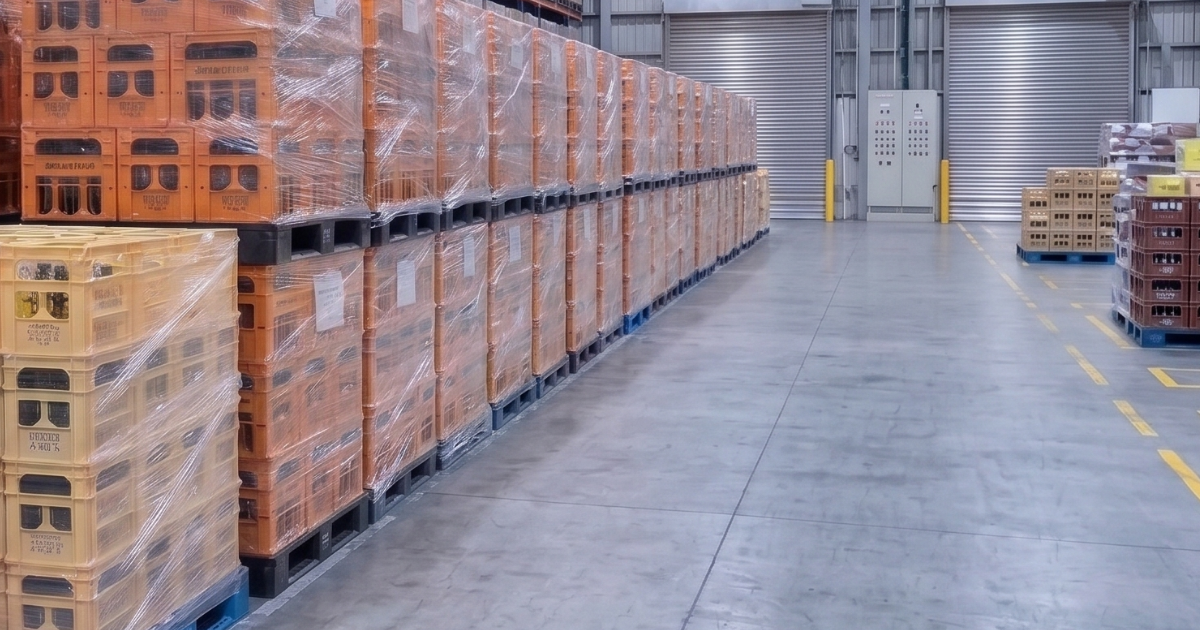
If you are about to start handling sake, the first priority is not major investment in equipment — it is shipping in refrigerated (reefer) containers.
In a dry container, temperatures inside can exceed 50°C in transit. The damage this does to quality is severe. For that reason, Sakura Saketen ships exclusively in reefer containers, and we make it a condition of doing business.
We cover the cold chain across the whole shipping process in Maintaining the Cold Chain: Essential for Japanese Sake Quality.
An Unbroken Cold Chain — Sakura Saketen's Strength
At Sakura Saketen, we maintain a cold chain at 5°C or below all the way from Japan to your warehouse. Storage at -5°C in our warehouse, reefer containers in transit, and refrigerated handling on arrival: delivering sake exactly as it tasted when it left the brewery is the foundation of our export business.
If you already run a wine logistics network, that experience will serve you well in sake. The one piece you will need — temperature design specific to sake — is something we can help with.
If you are considering carrying sake, our overview of the buying process is set out in Sake Wholesale: A Guide for International Buyers and How to Import Japanese Sake: 9 Steps.
With a few exceptions — sake intended to mature at ambient temperature, for example — yes. As a rule, keep sake refrigerated and out of ultraviolet light.
A wine cellar is not suitable for storing sake. Please use refrigeration at 5°C or below; -5°C is the ideal temperature.
There is no legally required best-before date. Bottles carry a production date (year and month) or a production lot number. As a guideline, pasteurized sake is best consumed within a year of production, and namazake (unpasteurized sake) as soon as possible — within three months at the outside. The lower the storage temperature, the longer sake stays at its best, and the closer you are to -5°C, the longer that window becomes.
As a rule, sake is made to be drunk fresh. Aged sake (koshu) does exist, but that aging is intended and managed by the brewery or the seller. Sake simply left sitting in a warehouse does not mature — it degrades.
We recommend specifying a reefer container. In a dry container, depending on the route and the season, temperatures inside can exceed 50°C, and quality is already compromised by the time the shipment arrives. Sakura Saketen asks all customers to ship in reefer.
Yes. At Sakura Sake Shop we accept sample orders from a single bottle. You can taste the sake and then choose the products before any formal trade.
After we hear about your sales market, we provide a custom quotation matched to your needs.
The key points for wine importers:
Temperature control is not a cost — it is an investment in quality. We hope you will bring the logistics and quality-management experience you have built in wine to selling sake. If you have any questions at all, please do get in touch.
Thinking about adding sake to your wine portfolio?
Sakura Sake Shop has specialized in exporting Japanese sake since the company was founded. We work directly with 70+ breweries and have export experience across 20+ countries and regions.
✓ A cold chain from −5°C to 5°C, delivering sake as it tasted at the brewery
✓ Temperature-controlled shipping in reefer containers, without exception
✓ Sample orders from a single bottle
✓ English-speaking sake specialists to support your storage and operational design