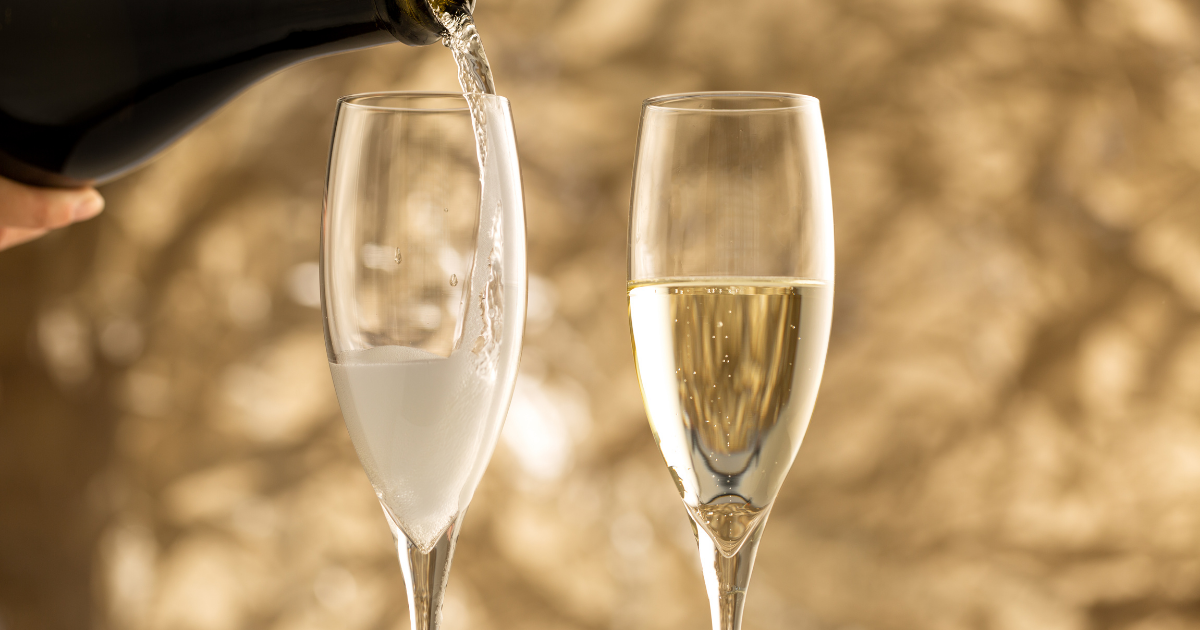
Among all the sake categories we work with, sparkling sake is the one that has been gaining the most popularity in recent years. A growing preference for low-alcohol drinks, demand as an aperitif, and the appeal to younger and female consumers all come together here, and the category keeps expanding in Western and Asian markets. At Sakura Sake Shop as well, orders for sparkling sake have steadily increased over the past few years.
The basics of sparkling sake, and the perspective of simply enjoying it as a drink, are covered in our separate article Sparkling Sake Guide: The Best 5 Japanese Champagne. This article goes one step further and focuses on the practical side — how importers, sake retailers and restaurants actually source and handle it.
What is sparkling sake?
Sparkling sake is a type of sake that contains carbon dioxide and is therefore effervescent. From lightly sparkling to strongly sparkling, the intensity of the bubbles and the character of the sake vary a lot depending on the production method. There is no special category for it in the classification of the National Tax Agency, but on the market it is recognized as an independent genre.
From a sourcing point of view, the first thing to keep in mind is that "sparkling sake" cannot be treated as one single thing. Depending on the production method, the price range, the degree to which cold storage is required, and the points to watch when serving are all completely different. Once you understand this, it becomes much easier to source the right products for your customer base.
The three production methods and how to judge them for sourcing
Sparkling sake is divided into three main types according to the production method. As the texture of the bubbles, the taste and the price range differ for each, you generally use them depending on your purpose and your target customers.
1. In-bottle secondary fermentation — traditional and authentic
Just like the méthode champenoise, the sake is refermented inside the bottle after bottling, which produces the carbon dioxide. The bubbles are natural and fine, and a deep umami coming from the yeast is characteristic.
Recently the "Atago no Matsu In-Bottle Secondary Fermentation Sparkling" from Niizawa Brewery (Miyagi) won "Sake of the Year" — the highest award at the Oriental Sake Awards (OSA) 2024, one of the largest sake competitions in Asia. More and more of these authentic types are being recognized at competitions.
2. Active nigori — making use of the fermentation of nama sake
For this method the sake is bottled right after the moromi is pressed, while the yeast is still very active, so that fermentation continues inside the bottle. The aroma of the yeast and a natural effervescence exist side by side, which makes it a very distinctive category.
It must be kept refrigerated and there is a real risk of it gushing out when opening, so this is by far the most demanding type to handle of the three.
3. Carbon dioxide injection — stable supply
Here the carbon dioxide is injected afterwards into a regular sake. It is easy and allows a stable production, the price range is fairly moderate, and in most cases it is finished fruity and on the lower-alcohol side.
As an entry product for younger and female consumers who prefer low-alcohol drinks, it is spreading abroad as well. The quality within this type is in fact quite broad: the "Atago no Matsu Sparkling" from Niizawa Brewery won a Silver medal in the sparkling category of the OSA 2025.
Alcohol content and range of taste
The alcohol content of sparkling sake is generally around 5–14%. It is often designed lower than standard sake (15–16%), which creates a light drinking impression.
The direction of the taste also covers a wide range — from sweet styles that keep some residual sugar to dry, crisp ones — similar to sparkling wine. When you put it on a menu abroad, it is recommended to offer three ranges: light and sweet (5–8%), medium-dry (9–11%) and dry and authentic (12–14%), so that you can cover different customer preferences.
How does sparkling sake differ from sparkling wine?
"Is sparkling sake something like champagne?" is a question we often get from customers abroad. The festive look is similar, but the raw material, the production method and the direction of the taste are completely different.
The biggest difference is the raw material. While sparkling wine is made from grapes, the raw material of sparkling sake is rice. The fermentation works differently as well: wine turns the grape sugar directly into alcohol in a single fermentation, whereas sake is made by a multiple parallel fermentation, in which the rice starch is converted into sugar and fermented at the same time. It is exactly this complex fermentation that is the source of the umami coming from the rice.
The direction of the taste is contrasting too. While sparkling wine is built on the acidity from the grapes together with the bubbles, sparkling sake is built on the umami of the rice, with the effervescence laid on top, resulting in a rounder taste.
For that reason sparkling sake goes well with cheese and Western food, but it is also a perfect pairing for Japanese cuisine such as sushi and tempura, and for delicate dishes in general.
For an international buyer this is a point that gives your customers a fresh surprise, and it can become a differentiating element on the menu.
Why is sparkling sake growing in overseas markets?
There are mainly three reasons why it keeps expanding abroad.
The first one is the trend towards low alcohol. Sparkling sake fits the wellness and low-alcohol trend in Western countries very well.
The second is the demand as an aperitif and for anniversaries: orders are increasing from restaurants and retailers who want the festive feel of champagne but also want to stand out with something distinctive.
The third is the appeal to younger and female consumers. The beauty of the bottle design and the photogenic look make it a product with strong communication power in the age of social media.
Handling points after sourcing
We have summarized the most important practical points — four in total — when handling sparkling sake abroad.
Temperature control
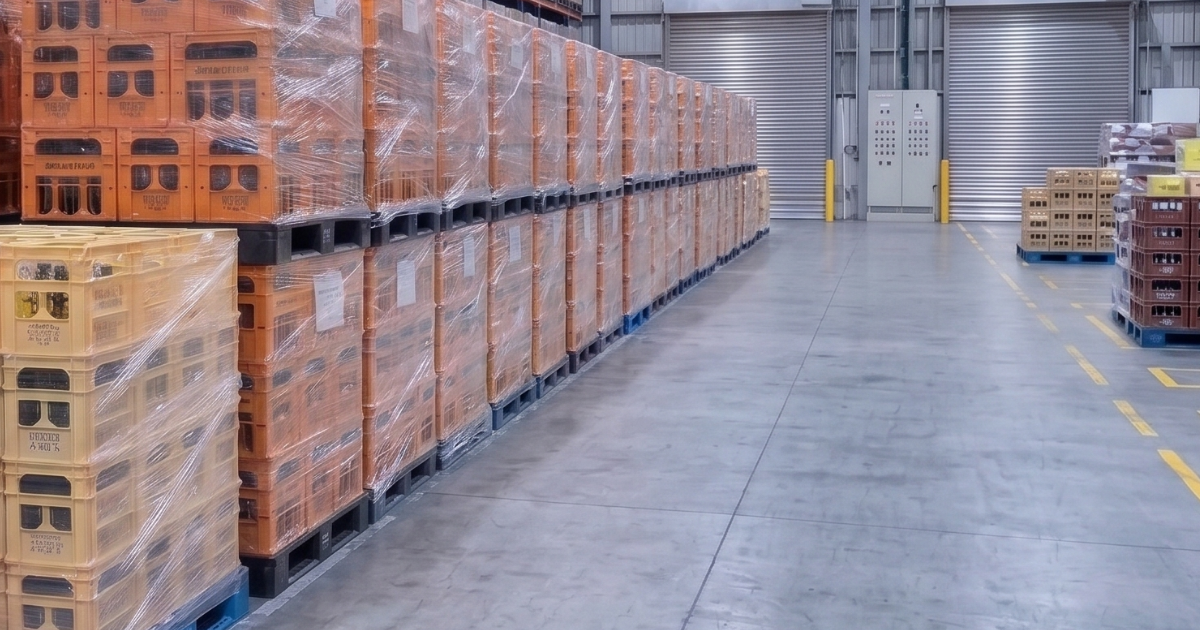
Storage should always be refrigerated (5°C or below is recommended, 0–5°C for active types), and for serving it should be well chilled (5–10°C). At Sakura Sake Shop we transport all sparkling sake, including the active types, by cold chain (−5°C to 5°C), so that it reaches you with its quality fully maintained.
Opening the bottle
In-bottle secondary fermentation and active nigori types carry the risk of gushing out when you open them. As a rule you should let the bottle stand upright in the fridge and settle for at least 24 hours before opening. It is safer to wrap the cap in a cloth or a non-slip towel and to open it slowly while letting the gas escape little by little. At Sakura Sake Shop we also train the serving staff when a new product is taken on.
Glassware for serving
If you want to keep the effervescence going, use a slim flute glass; if you also want your guests to enjoy the aroma, use a wine glass — ideally you use them depending on the dish.
Stock management
Sparkling sake requires more turnover-focused stock management than regular sake. Some in-bottle secondary fermentation types and some carbon-dioxide-injected types can be stored fairly long (refrigeration is a precondition in any case), but it is important to plan in a way that does not leave you with long-standing stock.
Sparkling sake at Sakura Sake Shop
Since its foundation Sakura Sake Shop has specialized in exporting Japanese sake, with direct trading relationships with 70+ breweries and a track record of exporting to 20+ countries and regions. For sparkling sake too, we source from several breweries.
In particular, we can introduce labels that have been recognized at competitions — such as the "Atago no Matsu In-Bottle Secondary Fermentation Sparkling" (Niizawa Brewery), which won "Sake of the Year" at the OSA 2024. From a lineup of 1,500+ products we propose a selection that fits your market and your customers, so please feel free to get in touch.
For how to go about importing, see Sake Wholesale: A Guide for International Buyers and How to Import Japanese Sake: 9 Simple Steps.
It depends on the type. The shortest is the active nigori type, with around 3 to 6 months from production as a guideline; in-bottle secondary fermentation keeps longer than that, and some carbon-dioxide-injected types can be stored for about a year. In all cases constant refrigeration is a precondition.
We accept sample orders from a single bottle. You can try it first, see what fits your customers, and only then place a proper order.
We recommend a temperature range of 0–5°C. If it is left at room temperature for a long time it deteriorates, and the risk of leaking or gushing out when opening increases.
Yes. On the contrary, as "the sparkling type of sake" it is increasingly sold side by side with wine in Japanese restaurants, wine bars and premium retailers.
Some breweries have started to offer non-alcoholic, sparkling-sake-style drinks. We do not carry them at the moment.
After we hear about your sales market, we provide a custom quotation matched to your needs.
Yes. Making use of our relationships with the breweries, we can produce sake with an original label.
Sparkling sake is a sake category that is steadily growing its presence in overseas markets. From a sourcing point of view, the first step is to understand that the production method splits into three types — in-bottle secondary fermentation, active nigori and carbon dioxide injection — and that the price range, the degree of required refrigeration and the points on opening differ for each.
With an alcohol content as low as 5–14%, the combination of rice umami and effervescence creates a unique position that sets it apart from sparkling wine. When handling it, cold chain and care on opening are essential.
At Sakura Sake Shop we support you from product proposals that fit your market and your customers all the way to quality-preserving transport, in one place. If you are thinking about expanding your sake lineup, please feel free to get in touch.
Ready to add Sparkling Sake to your lineup?
Since its foundation Sakura Sake Shop has specialized in exporting Japanese sake. We have direct trading relationships with 70+ breweries and a track record of exporting to 20+ countries and regions.
✓ All three types in stock — in-bottle secondary fermentation, active nigori and carbon dioxide injection
✓ Award-winning labels available, including the OSA 2024 "Sake of the Year"
✓ Sample orders from a single bottle
✓ Cold chain (−5°C to 5°C) handling
✓ An English-speaking sake specialist to support you in building your lineup