When you want to handle Japanese sake abroad, the most recommended way by far is to go through a reliable export trading company. There are other options as well — buying directly from the brewery, or going through a domestic liquor wholesaler in Japan. But once you consider the paperwork, the customs clearance, and the industry knowledge needed to select the right products for your market and to handle them correctly, a specialized export trading company is by far the shortest path to a successful business.
In this article, we have broken down for international buyers the wholesale options for Japanese sake, the role an export trading company plays, and how to choose a reliable partner.
What Is Sake Wholesale? The Three Routes for Importing
Sake wholesale describes a sales model in which sake is traded in case units or more, from breweries or export trading companies to the buyers who will sell it on — importers, liquor shops, restaurants, and retailers.
In general, there are three routes for an international buyer to source Japanese sake.
Route 1: Buying Directly from the Brewery
The advantages are that you can keep the price low and that you can build a direct relationship with the brewery. Depending on how that relationship develops, there is also the possibility to secure rare brands exclusively.
On the other hand, the disadvantage is that most breweries do not speak English, and in most cases they do not handle export paperwork or small-volume trades. Surprisingly often, a brewery will also decline a small order, as the cost-benefit ratio simply does not work out for them.
Route 2: Going Through a Major Domestic Liquor Wholesaler
Going through a domestic wholesaler that handles a wide range of alcoholic beverages — beer, wine, shochu, and the like — you may be able to order multiple Japanese sake products through a single company.
However, many of these wholesalers are fairly weak when it comes to sake-specific expertise, sake export know-how, and labels for foreign markets.
Route 3: Going Through an Export Trading Company (Recommended)
English communication, complete export paperwork, cold chain handling, trades possible from small volumes, and product proposals from a wide variety of breweries — when you want to handle Japanese sake seriously abroad, this is by far the most practical option.
Compared to direct sourcing the cost is higher, but once you take into account the know-how and the resources you save on logistics in the beginning, it is the option with by far the best return on investment.
The Five Roles an Export Trading Company Takes On
A reliable export trading company takes on the following roles all in one hand:
1. Negotiation and contracting with the breweries
2. Product line-up proposals matched to the needs of your market
3. Creation of English labels and promotional material
4. Preparation of customs documents (invoice, packing list, certificate of origin, and so on)
5. Ongoing support after the import (re-orders, sharing market feedback back to the breweries, and so on)
Especially when it comes to the customs documents, in addition to the invoice and the packing list, various papers such as the Certificate of Origin are required, and these differ from country to country.
On top of that, the English label needs entries in line with the so-called rule work of each country — the product name, alcohol content, ingredients, volume, country of origin (Made in Japan), importer information, and more. Getting these right for the requirements of each country directly affects the speed of customs clearance on site and whether the goods are accepted at all, so it is mission critical that the export trading company takes care of all of this in one hand.
Three Strengths of Sakura Sake Shop
Sakura Sake Shop is not what most people picture as a general trading company. Because we specialize exclusively in Japanese sake, we have direct relationships with every brewery in our lineup, bringing a discerning eye and sourcing strength built on tasting each sake again and again — combined with the customs, logistics, and international support functions of an export trading company, all under one roof. That is what most defines us.
Building the Relationship Between Brewery and Importer
At Sakura Sake Shop, we also put a lot of effort into building the relationship between the brewery and the importer.
When an importer wishes to visit a brewery, we attend to a wide range of things — the negotiation, the scheduling, the meals together. It does not stop at a simple first meeting: many of our partners have told us afterwards that it was the time when they could learn the most about the products and about the story of the brewery, and we are very glad to hear this.
Sample Orders Possible from a Single Bottle
At Sakura Sake Shop, we accept sample orders before the formal order. If there is a product on our own product list that catches your interest, we handle this flexibly so you can taste it and confirm the flavor for yourself.
Large wholesalers in most cases assume trades starting from pallet units (several dozen cases), so for smaller importers and restaurants the advantage of going through an export trading company becomes by far bigger.
A Strict Commitment to the Cold Chain
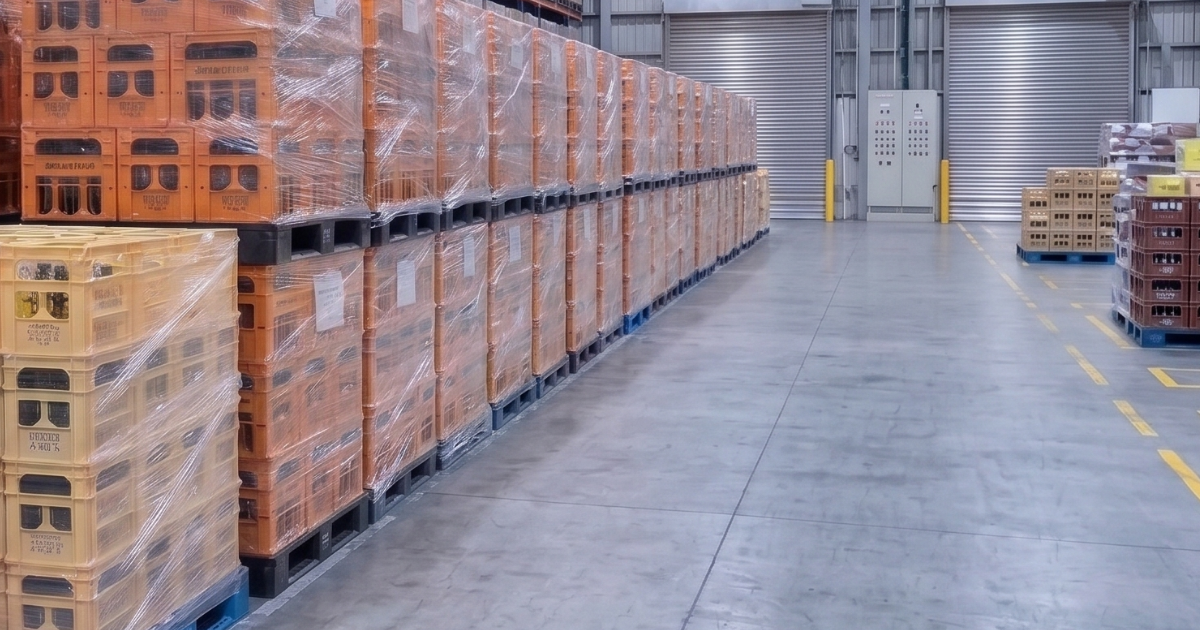
Sake is a drink that is sensitive to heat, light, and oxygen. Especially during sea transport in the summer, the inside of a container gets very hot, which raises the risk of quality loss. Delicate ginjo sake in particular suffers easily from heat damage — it is a product for which strict temperature control is demanded even inside Japan.
This is why transport in a reefer container (a temperature-controlled container) is so important. Transport in a normal container is possible, too, but only the transport itself. Out of our wish that the consumer can enjoy sake in a state as close as possible to how sake tastes when you drink it in Japan, we at Sakura Sake Shop are strict about our cold chain handling, and we recommend transport at −5°C to 5°C.
How to Choose a Reliable Export Trading Company
When importing Japanese sake, it is crucial to find a reliable export trading company. We have broken down the seven points that matter most when you select such a partner:
1. A track record of direct trade with breweries (a direct network without middlemen)
2. The number of breweries and brands handled (coverage and the width of your choices)
3. Cold chain handling (a setup for temperature-controlled transport)
4. English communication and support (language, time difference, ongoing assistance)
5. Years of export experience and number of destination countries (a track record across diverse markets)
6. Flexibility on the minimum lot (is an order from a single case possible?)
7. Additional support (private label, custom line-ups, market proposals)
About the Export Business of Sakura Sake Shop
Sakura Sake Shop is a trading company based in Ogaki City, Gifu Prefecture, specialized in the export of Japanese sake.
- A line-up of 70+ breweries and 1,500+ brands
- A track record of exports to 20+ countries
- Sample orders possible from a single bottle
- An English-speaking sake specialist accompanies your project
- Cold chain handling to keep the quality
- Private label proposals are possible as well
- Attendance and support for brewery visits
- Featured in media such as Forbes Japan, Reuters, and the Chubu Keizai Shimbun
As a real example of our trade, we have also published a success story with SAKE no BA in Austria.
Related article: Case Study: Austria - Building a Successful Sake Export Partnership
Yes. At Sakura Sake Shop we accept sample orders from a single bottle. You can taste the sake and then choose the products before any formal trade.
After we hear about your sales market, we provide a custom quotation matched to your needs.
It depends on the stock situation, the shipping mode, and the destination.
Yes. Making use of our relationships with the breweries, we can produce sake with an original label.
Yes. We handle reefer containers and temperature-controlled transport. Even with expensive premium sake, you can import without worry.
Buying directly from a brewery, going through a domestic liquor wholesaler in Japan, or going through an export trading company. Direct keeps the price lowest but most breweries do not work in English and do not handle export paperwork or small volumes. Domestic wholesalers cover many drink categories but are often thin on sake-specific export know-how.
Because the work arrives in one place: English communication, complete export paperwork, cold chain handling, trades from small volumes, and product proposals drawn from a wide range of breweries. The unit cost is higher than buying direct, but the logistics knowledge you do not have to build yourself usually more than covers it.
When you handle Japanese sake abroad, going through a reliable export trading company is the most practical way, and by far the shortest path to a successful business.
Finding a partner who can take care of all this in one stop — the export paperwork, keeping the quality, and even building the relationship with the breweries — is the first step to growing your sake business abroad steadily.
At Sakura Sake Shop, we continuously make proposals matched to the market and the wishes of each customer. If you are looking to handle Japanese sake abroad, please feel free to get in touch with us.
Ready to source premium Japanese sake for your business?
Sakura Sake Shop has specialized in the export of Japanese sake for more than 10 years since its founding. We have direct trade relationships with 70+ breweries and a track record of exports to 20+ countries.
✓ A searchable portfolio of 1,500+ brands
✓ Flexible orders from a single case
✓ We handle the full set of export documents for you
✓ Cold chain logistics
✓ An English-speaking sake sommelier supports you