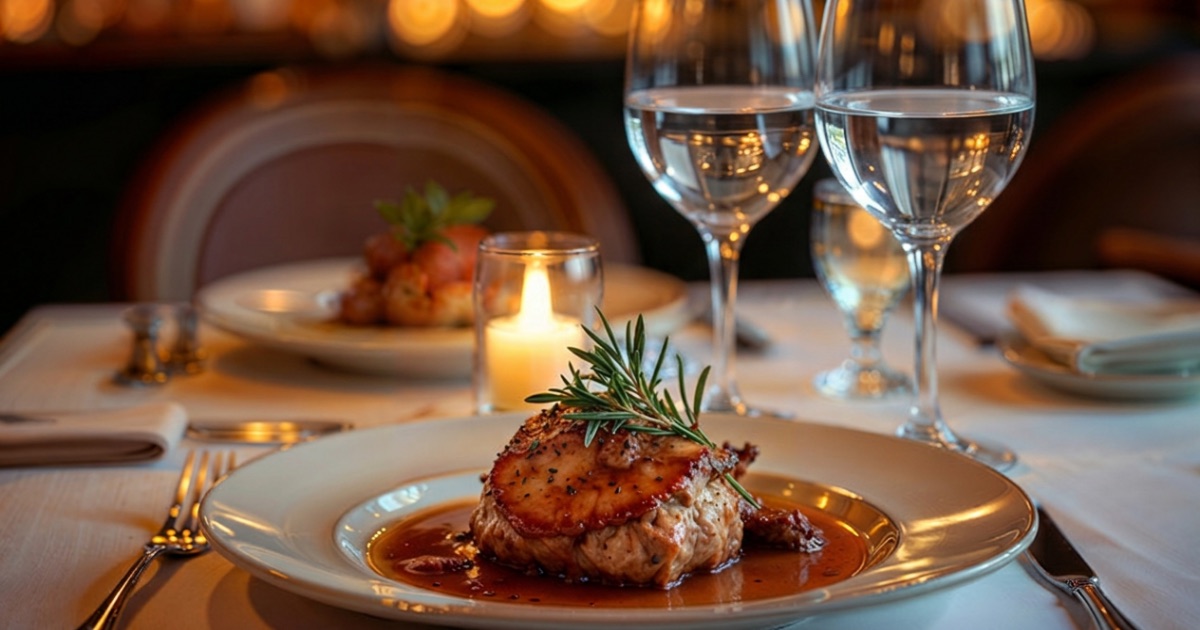
At Sakura Sake Shop, we recommend sake to restaurants and importers overseas as a drink that belongs on a steak menu.
That sake goes with sushi and sashimi is widely understood. That it also goes with steak still surprises a lot of people.
At the sake and food pairing events we run in Japan, the steak pairing draws the same response every time: surprise first, and then real enthusiasm from the guests.
Sake and steak work together very well — but not in the way red wine does. That is exactly why sake can sit alongside red wine on your list, as a second way to pair.
This article sets out why sake works with steak, and which style to choose, in a form you can use on the floor.
Two Reasons Sake Works with Steak
There are two main reasons.
1. The umami in sake layers onto the umami in the beef
Sake carries a pronounced savory depth — umami, the savory quality you find in dashi, aged cheese and cured meat — that comes from its high amino acid content. Beef contains umami compounds of its own, and when the two meet, each is felt more strongly than it would be alone. It is the same relationship as combining kombu and katsuobushi in Japanese cooking.
Sake, in other words, does not tighten the flavor of the meat. It layers onto the umami of the beef and extends it.
2. No tannin, so the sweetness of the meat comes forward
Sake has almost no tannic astringency. For guests who do not enjoy the grip of red wine, or who find that the astringency lingers when a red is poured with lean beef, sake is a very easy drink to enjoy.
Sake is also, on average, less than a third as acidic as wine. Rather than resetting the palate with acidity, it carries you smoothly on to the next bite.
For the fundamentals of how sake tastes, see What Does Sake Taste Like?
How It Differs from Red Wine: Wine Tightens, Sake Layers
Steak and red wine is a pairing established the world over. Sake is not there simply as a replacement for red wine.
Placed alongside red wine, it gives your guests a second way to pair.
Steaks built on Japanese seasonings — soy sauce, miso, wasabi — and cuts eaten for the umami of the lean meat are often where sake is the more natural fit of the two.
How to put this to wine-drinking guests is covered in How to Sell Sake to Wine Drinkers.
Four Principles for Pairing Sake with Food
Before the specifics, here are the four ideas Sakura Sake Shop works from when pairing sake with food. They apply to any dish, not only steak.
- Match intensity — align the strength of the dish and the sake
- Match flavor profiles, or create contrasting flavors — pair on a shared element, or on an element neither one has, and choose one of the two
- Consider temperature — align the temperature of the dish and the sake
- There is no absolute answer, the way there is in a mathematical formula
Steak is a strongly flavored dish, which makes the first principle straightforward to apply and steak comparatively easy to pair.
The four principles themselves are covered in The Ultimate Guide to Sake and Food Pairing.
The fourth principle matters a great deal in practice. The combinations in this article are pairings that are hard to get wrong — not the only correct answer. Whatever your guest finds delicious is the right answer for that guest.
How to Choose a Sake for Steak
“So which sake should I actually pour with a steak?”
At Sakura Sake Shop we do not sort sake as sweet or dry. We organize flavor using a framework we call the Sake Matrix.

The horizontal axis is aroma type:
- Classic Style (shown as Cereal/Rice on the matrix) — the settled aromas of freshly cooked rice, bread and grain
- Modern Style (shown as Fruity/Floral) — fruity aromas of pineapple, melon and apple
The vertical axis is body: Light / Medium / Full — the same sense as Light-bodied to Full-bodied in wine.
This is a starting framework rather than a rule, but for steak the Classic side is easier to work with. A light sake will be overwhelmed by the meat, so the reliable choice is Classic-Medium to Classic-Full: it brings out the umami of the meat and the sweetness of the fat, and stays drinkable to the last bite.
Pairings shift with the cut and the sauce, so if you have a more specific question, please get in touch.
→ See Classic-Medium sake
→ See Classic-Full sake
One Prerequisite: The Sake Has to Be in Condition
One last point, which comes before any question of pairing.
However well chosen the pairing, it will not work with sake that has degraded. Sake that has not been held at the right temperature loses the balance of its aroma and flavor, and can no longer do the job of bringing out the food.
The basic range for storing sake is -5°C to +5°C. This is covered in Sake Storage Temperature: What Wine Importers Need to Know.
Summary
- Sake works with steak for two reasons: umami layers onto umami, and there is no astringency
- Red wine tightens the finish; sake layers onto the umami of the meat. The roles differ, which is why the two can be poured side by side
- There are four principles for pairing. With steak, matching intensity is the easiest route in — and the pairing shifts with the sauce and the cut
Choosing sake for a steak menu also depends on your guests and on how the kitchen cooks. Talk to us and we will start from the combination that fits.
Looking for sake that works on a steak menu?
Sakura Sake Shop has specialized in exporting Japanese sake since the company was founded. We work directly with 70+ breweries and have export experience across 20+ countries and regions.
✓ 1,500+ SKUs to build a pairing from, matched to your menu and your guests
✓ Sample orders from a single bottle
✓ A cold chain at -5°C to +5°C, delivering sake as it tasted at the brewery
✓ English-speaking sake specialists to work with you on the pairing menu
It does. The umami in sake layers onto the umami in the beef, and each brings out the other. Sake also has almost no astringency, which makes it an easy pairing for guests who do not enjoy tannin in red wine.
A Classic-style sake with some body is the easiest to work with — Classic-Medium to Classic-Full on the Sake Matrix. That said, the right choice shifts with the cut and the sauce.
Sakura Sake Shop works from four principles: (1) match intensity between the dish and the sake, (2) match flavor profiles or create contrasting flavors, and choose one of the two, (3) consider temperature and align the dish and the sake, and (4) there is no absolute answer. With steak, the first is the most useful place to start.
Less a replacement than a different way to pair. Red wine uses tannin to tighten the finish; sake uses umami to layer onto the flavor of the meat. Carrying both on your list widens the choice you can offer your guests.
Yes. At Sakura Sake Shop we accept sample orders from a single bottle. You can taste the sake and then choose the products before any formal trade.
Yes. We handle reefer containers and temperature-controlled transport. Even with expensive premium sake, you can import without worry.
After we hear about your sales market, we provide a custom quotation matched to your needs.
Putting sake alongside meat on your menu?
Since its foundation Sakura Sake Shop has specialized in exporting Japanese sake. We have direct trading relationships with 70+ breweries and a track record of exporting to 20+ countries and regions.
✓ Pairing proposals built around your actual dishes
✓ Serving temperature guidance for each selection
✓ Sample orders from a single bottle
✓ Cold chain (−5°C to 5°C) handling
✓ An English-speaking sake specialist to support you